
I finished writing the following essay on February 14 of this year. I finished it and set it aside because, as much as I wanted to ask and answer the question, I didn’t feel like anyone really needed to hear what I had to say. Fast forward to today and it’s June 1, the first day of what has come to be called “Pride Month”. And then, last night was the Canadian Screen Awards presentation at which “Heated Rivalry” took home 16 awards, among them being Best Drama Series, Best Lead Performer (Hudson Williams), Best Supporting Performer (Sophie Nélisse), Best Direction and Writing (Jacob Tierney), and Best Guest Performance (Nadine Bhabha). And finally, I’m currently reading, “We Could be so Good,” by Cat Sebastian in which one of the lead characters voices some of the concerns with unhappy endings that I raise below. Well, it feels like the universe is trying to tell me something. So, here you go. Hope you enjoy my rambling.
—————
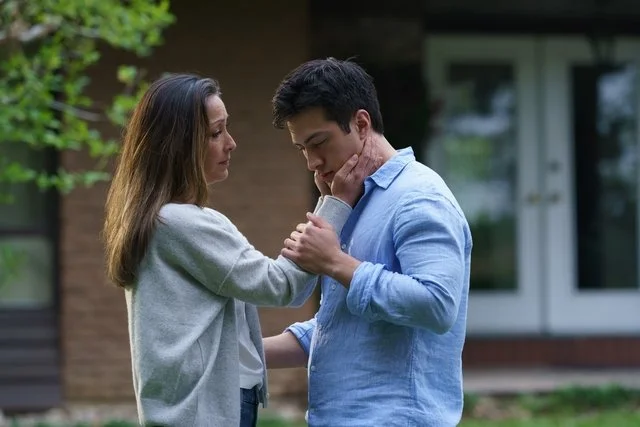
Why does “Heated Rivalry” mean so much
to so many folks?
On the way-off chance that you have managed to miss the intense cultural chatter about the Canadian-produced HBO series, “Heated Rivalry,” let me summarize by saying it’s a wonderfully steamy story about gay professional hockey players. It’s sexy, touching, entertaining–everything we need in the world right now. If you have seen it, or better still, if you’ve read and enjoyed the addictive series of books by Racheal Reid on which the show is based, then you will likely bristle at such a reductive, nearly dismissive description. I know I do, and I’m the one that wrote that description.
So, what’s the big deal? I think the answer requires a bit of digression.
My own context
First, I can only speak with any authority about what the books and TV series mean to me in the context of my own lived experience. I will try to express my thoughts about what it might mean to others, but I acknowledge that I will likely be a little out of my lane in stating how others feel. Knowing that limitation might not be enough to stop me from making an occasional generalization. For that I apologize in advance.
As far as my context or my lived experience goes, I’ll start by saying that I’m a 63 year old, white, fairly privileged, cisgender, gay/queer man who’s been married in one way or another to the same man for almost 35 years. For what it’s worth, my date of birth puts me demographically at the tail end of the Baby Boom and the beginning of Gen X. Yes, I was alive when JFK was president. I have always felt different, unsure, out of place, and wary. I’m not alone in having been bullied as a child. I generally perceived other boys as potentially dangerous. Sexuality-based insults–you know the ones–were particularly upsetting because they hit too close to the bone. There’s a particular pain that comes from having someone scream your truth in your face–one that as a child or young adult you don’t yet understand or acknowledge yourself–as the worst possible insult they can think of. But humans adapt. We mold ourselves as best we can to fit in and minimize risk. It’s survival, but it comes at a cost. Trauma, fear, and the perceived necessity of hiding led me to strive to excel so that my character and worth would be beyond reproach, apologize for things I didn’t do, accommodate others needs often at the cost of my own, and carry guilt for anytime that I fell short in any of these areas. Simultaneously, I never perceived invisibility as an entirely bad thing, because invisible meant ignored, which meant probably safe.
Now, sitting on top of this is the great good fortune that I got to go away to college, find my people (not everyone does), start to sort out my sexuality, and come out to, and with, a number of my close friends. It was the early to mid-80’s. We were the first kids to live in the light after the sexual revolution and Stonewall. Of course we formed gay and lesbian student organizations (we had fewer letters back then). Of course we marched in pride parades. But we also lived through the Regan era, Jesse Helms, Fred Phelps, Jerry Falwell, Pat Robertson and, more than anything, the AIDS epidemic and the loss of so many good, innocent, and talented people.
I also came of age at a time when, slowly but surely, I could reasonably expect to occasionally see LGBTQ+ representation in literature, film, and theatre. But, what was that representation like? In some cases it was optimistic: boy-meets-boy and they are happy, even if terrible stuff happens to them along the way. Others were darker, realistically portraying discrimination, harassment, family or social rejection, gay bashing, HIV-related illness and death, to name but a few things. Examples that come to mind across the spectrum of film, TV, and stage include productions like Tales of the City, Cabaret, Boys in the Band, Maurice, Paris is Burning, Longtime Companion, Angels in America, The Normal Heart, Bent, Torch Song Trilogy, The Adventures of Priscilla, Queen of the Desert, Thelma and Louise, Boys Don’t Cry, Prick Up Your Ears, Buddies, Philadelphia, My Beautiful Laundrette, and Another Country. Authors like Armisted Maupin, Paul Monette, Gordon Merick, Filice Picano, David Leavitt, Larry Kramer, and Patricia Nell Warren published work that included or focused on LGBTQ+ characters. These writers were following in the footsteps of literary giants like Gore Vidal, James Baldwin, E. M. Forrester, Christopher Isherwood, Jack Kerouac, Mary Renault, and Evelyn Waugh. These lists are woefully inadequate, male biased, and largely reflect my own reading and viewing.
The visibility that these works provided was, at the time, nothing short of amazing. To see a glimpse of someone like oneself on screen or in print is to dispel the notion that one is alone in the world. However, these often tragic characters also conditioned me to watch LGBTQ+ characters with a sense of trepidation as I waited for the shoe (and then the other shoe) to drop. In the Tales of the City series, Michael meets the love of his life who then dies of AIDS. Torch Song Trilogy is a testament to strength, resilience, and authenticity, but Arnold’s great love, Alan, dies in a gay bashing. In Maurice, Maurice is rejected by his college love who decides to live as a straight man and enjoy all of the attendant social benefits. After a failed attempt at an early form of conversion therapy Maurice meets Alec, but the two can only find happiness by withdrawing from society and becoming reclusive woodcutters. Don’t even get me started on Boys in the Band. Please don’t misunderstand me. I don’t question the value of these books and films, the motivation of their creators, or the inherent truths that they present. But couldn’t we get an innocent happy ending, even if life often isn’t like that?
In more recent years we have seen the presentation of LGBTQ+ characters living their unique, complicated, and often challenging lives, while still finding acceptance for their truth and authenticity. Here I’m thinking of things like Will and Grace, Looking, Queer as Folk, Big Eden, Love Simon, Heartstopper, Red, White, and Royal Blue, and now Heated Rivalry. There are strong elements of fantasy in all of these cases, and there’s no denying that there was also Brokeback Mountain and The Laramie Project, which deals with the brutal murder of Matthew Shepard.
Enter Heated Rivalry
To put it very succinctly, I feel seen. No, I’m not a hockey player. I’m not Russian, Canadian, neurodivergent, or attempting to live my life in the spotlight. Quite the contrary. But, as is true of all performing art, we aren’t required to be the character to find common ground and experience empathy. To me, good writing grabs the reader early on, provides good scene development, but is primarily character-driven; and those characters need to be three-dimensional, fleshy beings. They need to have a back story, to connect with each other, to have both strength and vulnerability, and to grow. I think the whole Game Changer book series and the Heated Rivalry TV series check all of those boxes.
But still, why the phenomenal reaction and why has it touched me? It’s not just the sense of feeling seen in the sense that there are characters on the page or the screen to whom I can relate. It’s also that a writer and director thought that those characters deserved portrayal AND that they deserved a challenging but ultimately happy story line.
Catharsis
Aristotle used the term catharsis to describe the purging of emotions experienced through music or drama. [2] Psychologists embrace this concept of empathetic release through art therapy, role play, or cinema therapy. [3] Whatever your preferred term, we’re talking about the idea of art, literature, theatre, or film presenting characters and stories that connect with the lived experiences of their viewers. In seeing characters, events, and emotions like our own shown back to us we are given the chance to see that we are not alone or that there are alternatives to our own negative experiences. Seeing those characters evince strength and courage in the face of adversity can inspire us to do the same. Seeing a character’s behavior reflect a sex-positive outlook on life, one that doesn't stigmatize sex, supports mental health. And, seeing those characters struggle in ways that we have struggled and still get a happy ending is just the sort of tear-jerking, feel-good experience that can, in small ways, begin to rewire some of the stored trauma that we carry around every day. [1]
Healthy role models
There is another aspect to this show that I’ve heard presented as being of significant appeal to women, but one to which I can also relate: the portrayal of men as emotionally available and vulnerable. Anyone who has felt the necessity to hide their feelings, mask their emotions, or suppress an essential aspect of their identity can probably relate to the feeling of relief or release that comes from seeing a character speak their truth. Looking at a character on screen and saying, “Yes!” can be a powerful affirmation.
I believe that we are all taught social norms for gender, class, intellect, emotional regulation–every aspect of life. The male archetypal roles of warrier, hero, provider, protector, and conqueror are negatively contrasted with weakness, sensitivity, nurturing and such. This binary contrast of jock-nerd, hero-weakling, and let’s face it, top-bottom, is society’s way of coercively shaping men. The same holds true for mental health. You are either strong and “normal”, or weak and going to pieces because of anxiety, depression, PTSD, ADHD, autism spectrum, or whatever other aspect of your life might not fit the pre-conceived model of perfection. Worse still, there are financial and social reward systems that further incentivize hiding or masking nonconformity with set archetypes. So yes, it’s a powerful thing to see the strong character, Ilya, gradually open up about his family trauma, confess his mental health struggles, and be the first one to say, “I love you”. There’s also victory in Shane’s brimming tears that break through his seemingly constant emotional control. The tender scene where he comes out to his girlfriend, Rose, and ultimately confesses that “I kinda prefer being the hole rather than the peg,” gets me every time (https://www.instagram.com/reels/DTktFOqDxOg).
Pulling this all together
Having written all of this, I’m still challenged to tie all of these thoughts up in a neat package. The best I can manage is that, while the books and TV series have been described as “cute smut about hockey players” (by the author herself), I find that it offers more to folks who are looking for more.[4]
To LGBTQ+ folks who grew up with media representations of people like themselves experiencing violence, cruelty, discrimination, or loneliness, this story, which is in turns fun, funny, sexy, emotional, and raw, invites the reader/viewer into a kind of restorative, cathartic experience as they walk with the characters through life events–self realization, coming out, and falling in love–that ultimately seem to lead toward health and happiness. I’m not saying that this is a documentary or that all of life fits into nice little happy ending packages. This is fiction intended for entertainment.
To people looking for role models, Reid’s characters offer examples of how people–men in this case and perhaps in particular–can work to reject some of their taught and learned behavior (stoicism, aggression, emotional distancing) and form trust relationships that allow them to more fully experience and express their feelings.
As with so many good, helpful, and happy things, there is another side to the coin, and one that deserves noting. As I said, this is fiction. Enjoy it, and take from it all of the positive things that you can. However, I believe that it’s important to distinguish between drawing inspiration from fictional characters and adopting them as yardsticks against which to measure real people. You might be looking for someone like Shane, Ilya, Scott, or Kip. Or, you might be wishing that a person in your life was more like your favorite character. This can be a short, direct route to a dark and disappointing place. We can only regulate our own behavior and strive to support others in doing the same for themselves. I try my best to love my friends and family for who they are and who they aspire to be. So, let’s all enjoy fiction for the escape, insight, and catharsis that it offers, while still acknowledging that real life is both more complicated and mundane, and that it runs on a completely different timeline.
—Russ Little, 14 February 2026
References
[1] van der Kolk, Bessell, “The Body Keeps the Score: Brain, Mind, and Body in the Healing of Trauma.” 2015.
[2] “Catharsis.” https://en.wikipedia.org/wiki/Catharsis, accessed on 13 February 2026.
[3] O’Bryan, Dr. Amanda Ph.D., LPCA, “What Is Movie and Cinema Therapy & How Does It Work?”, 30 March 2023. by https://positivepsychology.com/movie-cinema-therapy, accessed on 12 February 2026.
[4] https://www.rachelreidwrites.com, accessed on 14 February 2026.
Image: https://press.wbd.com/us/property/heated-rivalry/images, accessed 1 June 2026.